




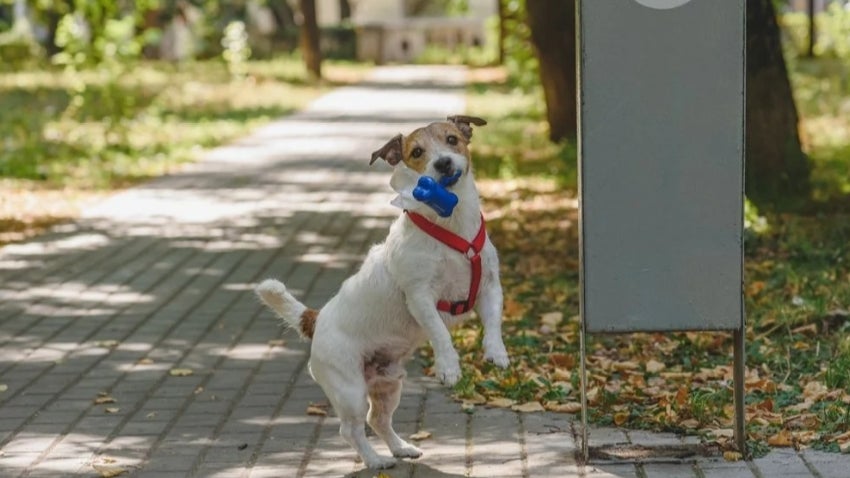
When pet waste is left on sidewalks, streets, yards, or other outdoor surfaces, rainwater and irrigation runoff can wash it into nearby storm drains.
Once it enters the storm drainage system, the waste is carried directly to local washes, rivers, lakes, and other waterways without treatment. Even small amounts of pet waste can contribute harmful bacteria, excess nutrients, and other pollutants to the environment, making proper cleanup an important part of protecting storm water quality.
The Scoop on Pet Poop
Myths/Facts about pet waste and storm drains
Myth | Fact |
|---|---|
Pet waste is fertilizer Pet waste contains high levels of nutrients, including nitrogen, that can damage plants and lawns and contribute to water pollution. | Pet waste is swept into the stormwater drain When water runs over pet waste during watering or a storm it is swept into the storm drain. |
Storm water drain is treated Unlike our sewage system, storm water does not get treated at a treatment plant. It eventually makes its way back to our washes, lakes, basins, and groundwater. | Pet waste carries bacteria Pet waste can contain harmful bacteria and pathogens, including E. coli, that may impact water quality and public health. |
There is nothing I can do to stop this from happening. You can pick up your pet waste and educate your neighbors to do the same. | Small Actions Make a Big Difference Always pick up after your pet and dispose of waste in the trash. When everyone does their part, we help keep our community, parks and waterways clean. |
So, Scoop the poop! And remember ... Where stormwater flows, everything goes.