
It all started with an email.
The city's Transportation Engineering Division received a religious accommodation request relating to pedestrian actuation: the use of pushbuttons or sensors to request the signal to be able to cross the intersection or crosswalk.
This resident had asked if the city could figure out a way for them to be able to cross the road without having to press the button and violate the Sabbath, which prohibits the use of fire and therefore electricity during its observance.
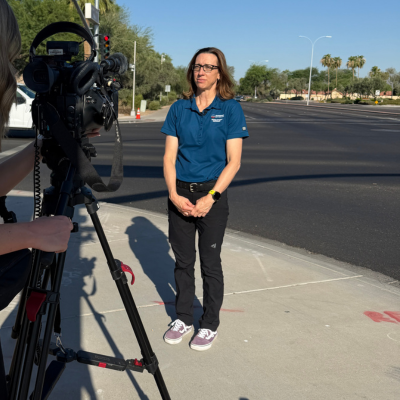
“Chandler had never done anything like this before and so we had a new system that had been trying out for vehicle detection,” said Alisa Doll, a signals system traffic engineer with the City of Chandler.
“We decided to do a pilot program to try and help this resident and so we installed this system.”
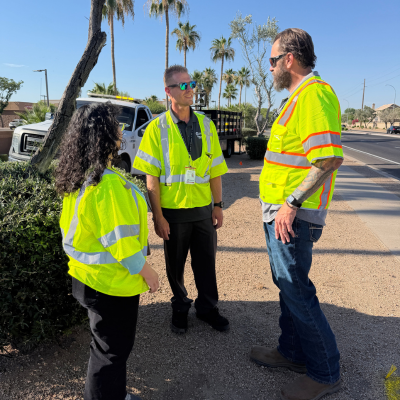
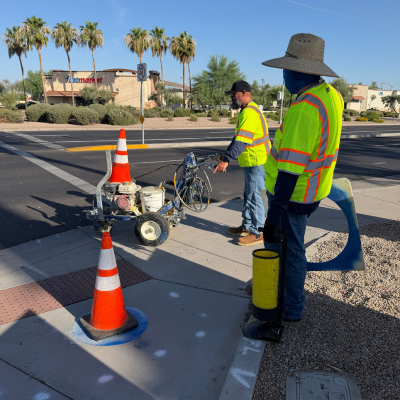
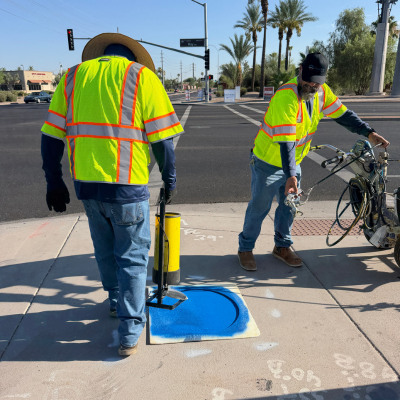
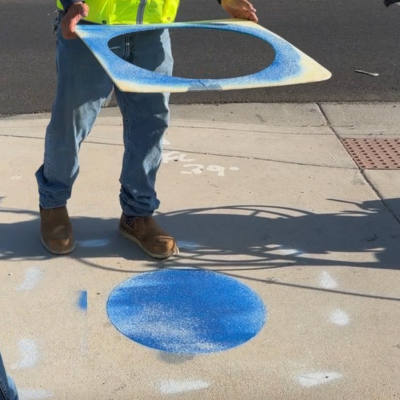
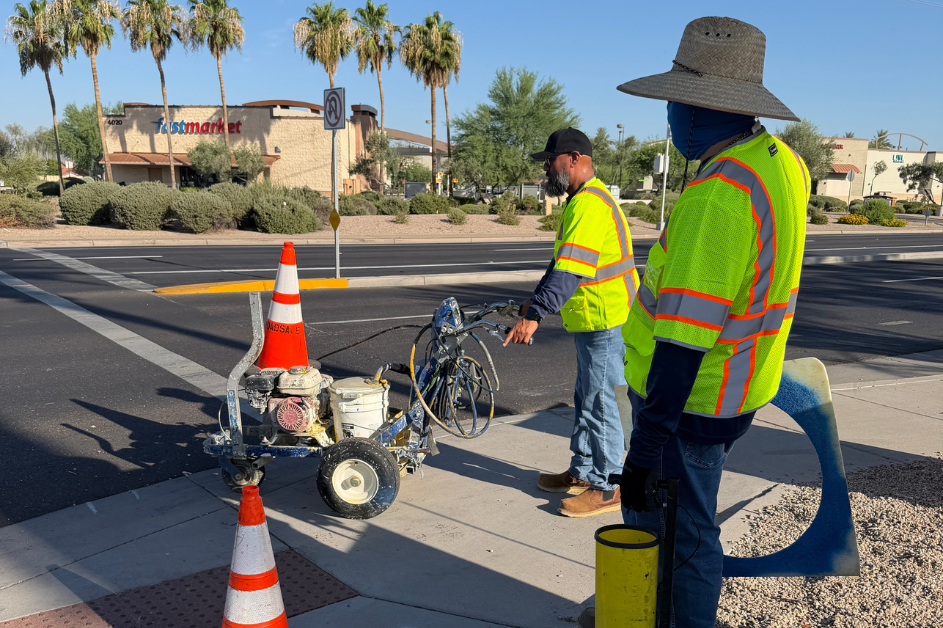
The Traffic Operations team painted blue circles at each corner of the intersection/at each crosswalk section.
“That would let the pedestrian know that this is where they need to stand, so that they could be detected, and then that would tell the signal... to actually change and give them a walk [sign],” Doll explains.
“I think it's a really cool new technology, and not only for this particular religious reasons, but also for ADA,” Doll says. “We do have other people in wheelchairs, or maybe they have limited reach ability, although we do have ADA standards... it still might be difficult for some people... this would allow them to not have to worry about trying to push the button."
City staff is still at work, installing LiDAR detection systems for vehicle and traffic flow at intersections across the city, but there are some future pilot programs in work for pedestrian applications.
“One upcoming pilot project will evaluate the use of LiDAR technology to provide adaptive pedestrian crossing times,” said Doll.
“The LiDAR system has the ability to detect a pedestrian's walking speed while they are in the crosswalk. If the system determines that a pedestrian requires additional time to safely complete the crossing, it can automatically extend the pedestrian phase.”
This type of use would allow for extra crossing time for those that may need it, while still balancing the flow of traffic to avoid unnecessary delays.
And while as not to toot our own horn, the City of Chandler is among the first in the nation to apply LiDAR technology to pedestrian actuation, but what else would you expect from a city of innovation?