

Chandler has long prided itself on being a safe, family‑oriented city. Today, the Chandler Police Department is building on that reputation by reimagining the role of police in our community. They are designing a police force that is more visible in prevention, more intentional in early intervention and increasingly collaborative with residents in shaping how public safety feels and functions.
A data‑driven focus on what matters most
Chandler Police track major crimes in near real time, using that data to adjust patrols, resources and outreach exactly where they are needed most. This shift from reacting to patterns after they happen to spotting them early means fewer repeat offenses and faster support for neighborhoods in need. Residents are no longer just “crime statistics”; they are partners in interpreting what the numbers tell us and shaping how we respond.
Meeting crises with care, not just cuffs
One of the most important steps forward is expanding the Behavioral Health Unit. When someone experiences a mental‑health crisis, the goal is no longer simply to “clear a call” but to de‑escalate, connect to care and reduce recidivism. Embedded partnerships with Community Bridges, Mind 24/7, Chandler Fire’s Crisis Response Team and other community‑based providers allow officers to refer folks to services instead of defaulting to the emergency room or the jail system. Residents, providers and faith‑based leaders are now part of ongoing conversations about how these interventions can better prevent people from cycling through the system.
Technology that serves the entire community
The Real‑Time Operations Center has quietly revolutionized how police prepare for and respond to incidents. By integrating maps, cameras, license‑plate readers and 911‑streaming tools into a central hub, officers arrive on scene far better informed, which helps keep both the public and first responders safe. While the technology is powerful, it is also being rolled out transparently: community members and advisory groups are being invited into conversations about camera‑network opt‑ins, data‑sharing with neighboring jurisdictions and how convenience can coexist with strong privacy safeguards.
Early intervention and education that start in our schools
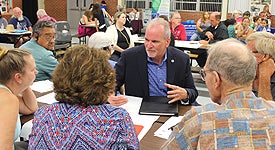
In Chandler, prevention begins long before an arrest would ever be considered. Through the “Equipping Youth to Navigate Challenges” education initiatives and other school‑engagement programs, officers are working hand‑in‑hand with teachers, parents and students to teach conflict‑resolution skills, de‑escalation and how to seek help before small problems become big ones. A new faith‑based advisory board and neighborhood‑level forums ensure that community values, cultural insights and lived experiences are folded into policymaking, not treated as afterthoughts.
A fully staffed police force, built with the community
Chandler Police is now fully staffed with its full complement of sworn officers, allowing them to prioritize time‑sensitive and serious incidents while police aides handle many non‑criminal calls. These aides are not just filling gaps; they are being groomed through on‑the‑job training and mentorship to one day become sworn officers, ensuring that today’s innovators are also tomorrow’s leaders. It’s a concrete example of how our police department is investing in people from the inside out, so residents, new recruits and long‑tenured officers feel invested in the same vision of safer, healthier neighborhoods.
Modern policing, in Chandler, is becoming a shared design project. We no longer ask simply, “How quickly can we solve crime?” We are asking, “How can we prevent it and how can every resident help?” When neighbors, faith leaders, educators, business owners and police officers co-create that future together, public safety stops feeling like a department and starts feeling like a community.